1600
lph
Multiple
Effect
Evaporator
Vacuum
Crystallization
Equipment
for
Wastewater
Engineered
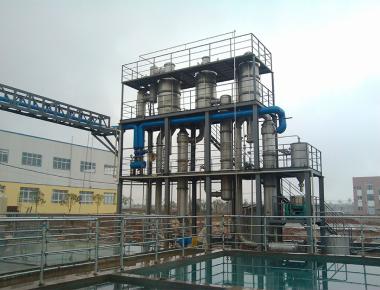
falling/thin-film
multi-effect
evaporation
line
delivering
1,600
L/h
(≈1.6
m³/h)
evaporation
capacity
for
high-salinity
and
industrial
wastewater.
The
system
couples
efficient
multiple
effects
with
vacuum
crystallization
to
recover
clean
condensate
and
produce
stable
crystals—while
minimizing
steam
and
power
consumption.
Why
Multiple
Effect
Evaporation
for
Wastewater?
Evaporation
remains
one
of
the
most
widely
used
and
robust
technologies
for
concentrating
aqueous
solutions.
In
a
multiple
effect
evaporator
(MEE),
the
vapor
from
one
effect
becomes
the
heating
medium
for
the
next,
dramatically
improving
thermal
efficiency.
Integrating
TVR
(thermo-vapor
recompression)
or
MVR
(mechanical
vapor
recompression)
further
reuses
“dead”
vapors,
reducing
utility
demand.
Typical
staged
operation
limits
product
temperature
exposure—e.g.,
about
80
°C
in
the
first
stage
down
to
≈40
°C
in
the
last
stage.
Lower
OPEX
Rising
effects
reduce
fresh
steam
demand;
optional
TVR/MVR
boosts
savings
further.
Consistent
Effluent
Quality
Vacuum
crystallization
stabilizes
solids
formation
and
improves
downstream
handling.
Compact,
Clean,
and
Maintainable
Hygienic
seamless
piping,
short
residence
times,
and
CIP-friendly
internals.
How
It
Works
Multiple
Effect
Evaporation
-
The
number
of
effects
directly
drives
energy
economy—more
effects,
lower
steam
per
kg
of
evaporation.
-
Raw
steam
feeds
the
first
effect;
generated
vapors
cascade
as
heating
media
to
subsequent
effects.
-
TVR
or
MVR
may
be
integrated
to
recycle
secondary
vapors
and
cut
utilities
further.
Material
Process
-
Feed
is
delivered
via
feed
pump
and
EM
flowmeter
to
the
front
preheater,
then
to
the
top
distributor
of
the
1st-effect
heater
for
primary
falling-film
evaporation.
-
Bottoms
from
the
1st
effect
are
pumped
to
the
2nd-effect
distributor
for
secondary
falling-film
evaporation.
-
Bottoms
from
the
2nd
effect
are
pumped
to
the
3rd-effect
distributor
for
a
third
falling-film
pass
(if
applicable).
-
Concentration
is
monitored
online
(e.g.,
hydrometer).
If
on-spec,
discharge
to
product
tank;
if
off-spec,
recirculate
for
re-evaporation.
Steam
Process
Raw
steam
heats
the
1st-effect
heater.
Secondary
vapor
from
each
effect
heats
the
next
effect.
Terminal
vapors
are
condensed
in
the
end
condenser;
condensate
is
removed
by
the
condensate
pump.
Condensate
&
Non-Condensables
1st-effect
condensate
preheats
incoming
feed
to
save
raw
steam.
2nd/3rd-effect
condensates
are
discharged
by
the
condensate
pump,
meeting
zero-pollution
discharge
targets.
Non-condensables
are
routed
to
the
end
condenser
and
evacuated
by
a
vacuum
pump.
Working
Principle
Chart
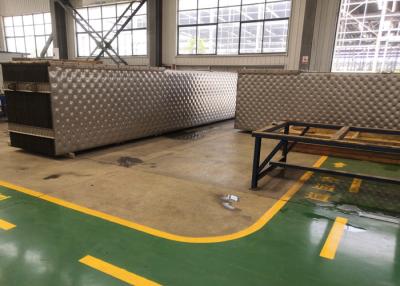
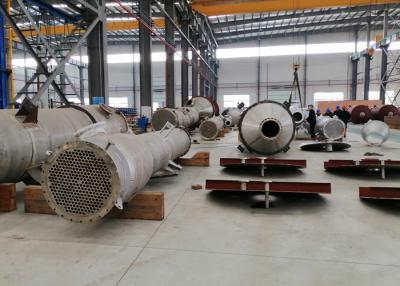
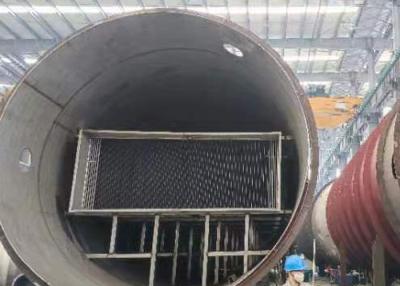
Workshop
Site
Key
Characteristics
-
Evaporation
capacity:
500
kg/h
to
80
t/h
(standardized
ranges);
this
model:
≈1,600
L/h.
-
Materials:
SS304
or
SS316L
optional.
-
Closed
process:
Fast,
low-temperature
evaporation
under
vacuum.
-
Sanitary
design:
Mirror-polished
seamless
pipes;
low
fouling;
easy
to
clean
(CIP).
-
Steam
economy:
≈1
kg
steam
can
evaporate
3.5–4.0
kg
water
(typical
multi-effect).
-
Low
temperature
duty:
Part
of
secondary
steam
can
be
re-induced
to
single
effect
(e.g.,
spray
hot-pressure
pump)
to
lower
operating
temperature.
-
High
concentration
ratio:
Falling
film
enables
viscous
feeds,
short
residence
time,
hard-to-scale
surfaces;
ratio
up
to
1:5
typical.
-
Automation:
PLC/HMI
with
interlocks
and
historian;
GMP-friendly
management.
-
Configurable:
Tailored
to
feed
chemistry
and
client
utility
envelope.
Typical
Three-Effect
Falling
Film
Evaporator
—
Specs
&
Technical
Parameters
|
Parameter
/
Specifications
|
HP-3.0
|
HP-4.5
|
HP-6.0
|
HP-9.0
|
HP-12.0
|
HP-15
|
HP-20
|
HP-24
|
HP-30
|
HP-50
|
|
Evaporation
capacity
(kg/h)
|
3000
|
4500
|
6000
|
9000
|
12000
|
15000
|
20000
|
24000
|
30000
|
50000
|
|
Raw
steam
consumption
(kg/h)
|
900
|
1350
|
1800
|
2700
|
3600
|
4500
|
4500
|
7200
|
9000
|
15000
|
|
Vacuum
degree
of
each
effect
|
First
|
0
|
|
Second
|
448
|
|
(mmHg)
|
Third
|
640
|
|
Evaporation
temperature
of
each
effect
|
First
|
99
|
|
Second
|
76
|
|
Third
|
53
|
|
Steam
pressure
for
evaporation
(MPa)
|
0.6–1.0
(absolute)
|
|
Solid
content
in
feed
(%)
|
6–7
(example)
|
|
Solid
content
outlet
(%)
|
42–48
(example)
|
Delivery
Workflow
Feed
&
target
→
Process
design
&
heat
balance
→
Pilot/bench
validation
(optional)
→
Detailed
engineering
&
fabrication
→
Installation
&
commissioning
→
Performance
test
&
training
→
Maintenance
&
spare
strategy
Applications
Ideal
for
industrial
wastewater
concentration,
high-salinity
brine
management,
ZLD
pretreatment,
and
resource
recovery.
The
vacuum
crystallization
stage
produces
discrete
salt
crystals
and
clean
condensate
suitable
for
reuse
or
compliant
discharge.
Frequently
Asked
Questions
Q1:
How
does
adding
more
effects
reduce
energy
consumption?
Each
additional
effect
reuses
the
previous
effect’s
vapor
as
a
heat
source,
lowering
the
specific
steam
consumption
per
kg
of
evaporation.
Q2:
Can
the
system
handle
scaling
or
viscous
feeds?
Yes.
Falling-film
hydrodynamics,
proper
velocity,
and
tailored
ΔT
help
minimize
scaling.
CIP
and
mirror-polished
sanitary
tubes
further
reduce
fouling.
Q3:
What
steam
economy
can
I
expect?
Typical
multi-effect
systems
achieve
about
3.5–4.0
kg
water/kg
steam,
depending
on
the
number
of
effects
and
integration
of
TVR/MVR.
Q4:
What
about
condensate
quality?
Terminal
condensation
and
vacuum
removal
of
non-condensables
deliver
clean
condensate
suitable
for
reuse;
quality
depends
on
feed
characteristics
and
design
options.