English
Sign in
| Price | Negotiable |
| MOQ | Negotiable |
| Delivery Time | 60 working days |
| Brand | Kingrail |
| Place of Origin | China |
| Certification | ISO |
| Model Number | |
| Packaging Details | standard export package, or as per customer request |
| Payment Terms | L/C,D/A,D/P,T/T,Western Union,MoneyGram |
| Supply Ability | 1 million pcs/year |
| Page Status | Unavailable | Packaging Details | standard export package, or as per customer request |
| Supply Ability | 1 million pcs/year | Test | UT, MT, Hardness, Impact |
| Minimum Order Quantity | Negotiable | Production | As Per Customer Drawings |
| Wheel Diameter | 360mm to 1250mm | Diameter | varies (commonly 600mm - 1200mm) |
| User Access | Restricted | Tread Pattern | Grooved |
| Content Delivery | Not Allowed | Bearingtype | Compatible with roller or ball bearings |
| Precision Rating | P0 P6 P5 P4 P2 | Place of Origin | China |
| Service | OEM\ODM | Model Number | |
| Certification | ISO | Brand Name | Kingrail |
| Payment Terms | L/C,D/A,D/P,T/T,Western Union,MoneyGram | Price | Negotiable |
| Delivery Time | 60 working days | Surface Finish | Machining Or Spay Painting |
| Wheel Type | Monoblock forged | Deck Material | Mild steel or chequered plate |
| Structural Reliability | High |
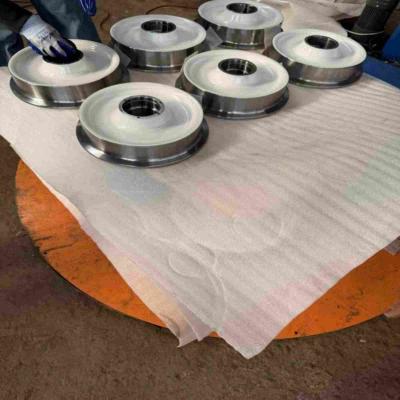
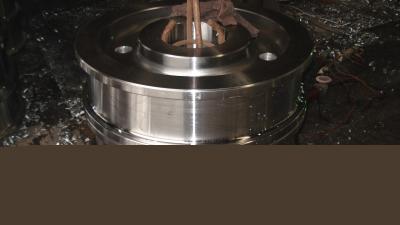
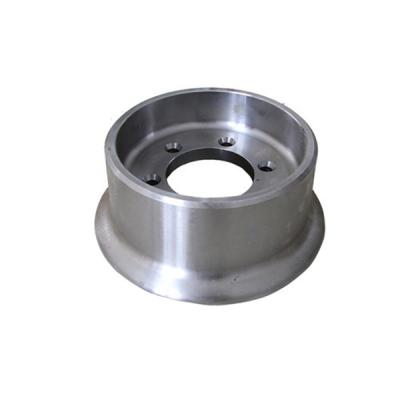
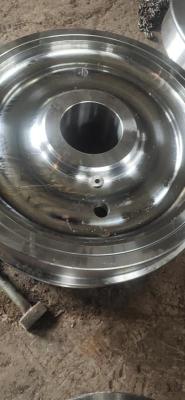
Road-rail vehicle wheels are designed for maintenance and inspection vehicles that can operate on both road surfaces and railway tracks.
These forged wheels are used in specialized rail service equipment where compact size, stable guidance, and reliable wear performance are required.
They are suitable for inspection vehicles, maintenance units, and rail access equipment.
This type of railway wheel is widely used in:
These materials provide good strength and durability for service vehicles operating in maintenance environments.
This range is suitable for smaller road-rail platforms that require controlled dimensions and stable running.
This hardness range helps improve wear resistance while maintaining toughness for service use.
Dimensional precision improves compatibility with maintenance vehicle assemblies and supports stable wheel-to-rail contact.
Forging improves consistency and internal quality, which is important for service vehicles used in frequent field operations.
Key performance parameters:
These parameters directly affect:
| Item | Specification |
|---|---|
| Material | ER7 / 4140 |
| Diameter | 400–800 mm |
| Hardness | 260–320 HB |
| Standard | ISO / EN |
| Flange Height | 24–32 mm |
| Flange Thickness | 25–30 mm |
| Rim Thickness | 50–65 mm |
| Bore Diameter | 80–180 mm |
| Heat Treatment | Quenching & Tempering |
| Inspection | UT / MT / Hardness / Dimensional |
These railway wheels help solve:
They improve operational reliability, reduce service downtime, and support safer maintenance vehicle performance.
Q1: What material is suitable for road-rail vehicle wheels?
ER7 is suitable for standard service vehicles, while 4140 can be used for higher-duty applications.
Q2: Why are smaller wheel diameters common in road-rail vehicles?
These vehicles are compact and require wheel sizes matched to lighter maintenance platforms.
Q3: Can road-rail vehicle wheels be customized?
Yes, custom dimensions and profiles can be produced based on drawings and vehicle requirements.