If
you
work
with
spinning
spare
parts—think
rotors,
shafts,
spindles,
or
any
component
that's
constantly
in
motion—you
know
that
failure
isn't
an
option.
These
parts
face
a
brutal
daily
grind:
friction,
heat,
and
relentless
wear.
So,
how
do
you
armor
them
up
for
the
long
haul?
One
of
the
most
effective
solutions
is
often
the
most
overlooked:
electroplating.
But
here's
the
catch:
electroplating
a
spinning
part
isn't
like
plating
a
simple
bracket.
It
requires
a
specific
approach
to
ensure
the
coating
is
uniform,
durable,
and
doesn't
throw
the
part
off
balance.
Let's
break
down
why
this
process
is
a
game-changer
and
what
you
need
to
know
to
get
it
right.


Why
Plate
a
Part
That
Spins?
It's
All
About
Performance.
You
might
think
of
electroplating
as
just
making
a
part
look
shiny.
For
spinning
components,
it's
a
critical
performance
upgrade.
Here’s
what
it
delivers:
-
Wear
Resistance:
This
is
the
big
one.
A
hard
chrome
or
nickel
plating
acts
like
a
sacrificial
shield,
taking
the
abuse
so
your
base
metal
(like
steel
or
aluminum)
doesn't
have
to.
This
dramatically
extends
the
part's
lifespan.
-
Reduced
Friction:
A
super-smooth,
low-friction
plating
surface
means
less
energy
is
lost
to
heat
and
drag.
Your
machine
runs
more
efficiently,
cooler,
and
with
less
power.
-
Corrosion
Protection:
Spinning
parts
in
humid
or
harsh
environments
are
rust
magnets.
A
zinc
or
nickel
plating
creates
a
barrier
that
stops
corrosion
in
its
tracks,
preventing
seizing
and
failure.
-
Salvaging
Worn
Parts:
Got
a
shaft
that's
slightly
undersized
from
wear?
Electroplating
can
be
used
to
build
up
the
surface,
bringing
it
back
to
its
original
dimension—a
huge
cost-saver
compared
to
a
full
replacement.
The
"Spinning"
Challenge:
Why
Uniformity
is
Everything
Plating
a
static
part
is
straightforward.
Plating
a
part
that
needs
to
be
perfectly
balanced
at
high
RPMs
is
a
different
ball
game.
The
key
is
uniform
deposition.
If
the
plating
is
thicker
on
one
side
than
the
other,
even
by
a
tiny
amount,
you've
created
an
imbalance.
At
high
speeds,
this
can
cause
catastrophic
vibration,
noise,
and
premature
bearing
failure.
The
Pro's
Playbook:
Techniques
for
a
Perfect,
Balanced
Coat
This
isn't
a
"dip
and
pray"
process.
Reputable
shops
use
specific
techniques
to
guarantee
uniformity
for
rotating
components:
-
Rack
and
Rotate:
The
most
common
method.
The
part
is
mounted
on
a
specialized
rack
that
slowly
and
continuously
rotates
it
during
the
entire
plating
process.
This
ensures
the
plating
solution
has
equal
access
to
all
surfaces,
preventing
thick
spots
and
thin
spots.
-
Anode
Positioning:
Experienced
platers
will
strategically
place
the
anodes
(the
source
of
the
plating
metal)
around
the
rotating
part.
This
creates
a
consistent
electrical
field,
further
promoting
an
even
deposit
across
complex
geometries.
-
Controlled
Current
Density:
The
electrical
current
used
in
the
process
is
carefully
controlled.
Too
high,
and
the
plating
can
become
rough
and
nodular.
Too
low,
and
it
won't
plate
properly.
For
spinning
parts,
a
steady,
optimized
current
is
non-negotiable
for
a
smooth,
uniform
finish.
Choosing
the
Right
Plating
for
the
Job
Not
all
platings
are
created
equal.
Your
choice
depends
on
what
your
part
needs
to
endure:
-
Hard
Chrome:
The
gold
standard
for
extreme
wear
resistance
and
low
friction.
It's
incredibly
hard
and
durable,
perfect
for
hydraulic
rods,
crankshafts,
and
bearing
surfaces.
-
Electroless
Nickel
(ENP):
Provides
excellent
corrosion
resistance
and
a
very
uniform
coating,
even
on
complex
shapes.
It's
also
very
hard
and
has
natural
lubricity.
A
fantastic
all-rounder.
-
Zinc:
Primarily
for
corrosion
protection
(often
with
a
bright
yellow
or
blue
chromate
finish).
It's
less
wear-resistant
than
chrome
or
nickel
but
is
a
cost-effective
solution
for
many
applications.
Your
Blueprint
for
Success:
The
Pre-Plating
Conversation
To
get
the
best
results
from
your
plating
partner,
come
prepared.
When
you
request
a
quote,
be
ready
to
discuss:
-
The
Part's
Function:
What
does
it
do?
How
fast
does
it
spin?
What
forces
does
it
endure?
-
The
Base
Material:
What
is
the
part
made
of?
(e.g.,
4140
Steel,
6061
Aluminum,
etc.)
-
Critical
Dimensions:
Specify
any
tolerance
zones
that
cannot
be
built
up,
as
plating
does
add
thickness.
-
The
Primary
Goal:
Is
it
wear
resistance,
corrosion
protection,
or
building
up
a
worn
surface?
Finding
a
shop
that
understands
the
unique
demands
of
spinning
parts
is
crucial.
You
need
a
partner
who
asks
these
questions
and
has
the
proven
techniques
to
deliver
a
balanced,
high-performance
finish.
Ready
to
enhance
the
durability
and
performance
of
your
rotating
components?
[Contact
our
specialist
team
today]
for
a
consultative
review
of
your
parts
and
a
plating
solution
built
for
speed
and
longevity.
|
|
CNC
Turning,
CNC
Milling,
Laser
Cutting,
Bending,
Spining,
Wire
Cutting,
Stamping,
Electric
Discharge
Machining
(EDM),
Injection
Molding,3D
Printing,Rapid
Prototype,Moulds
etc.
|
|
|
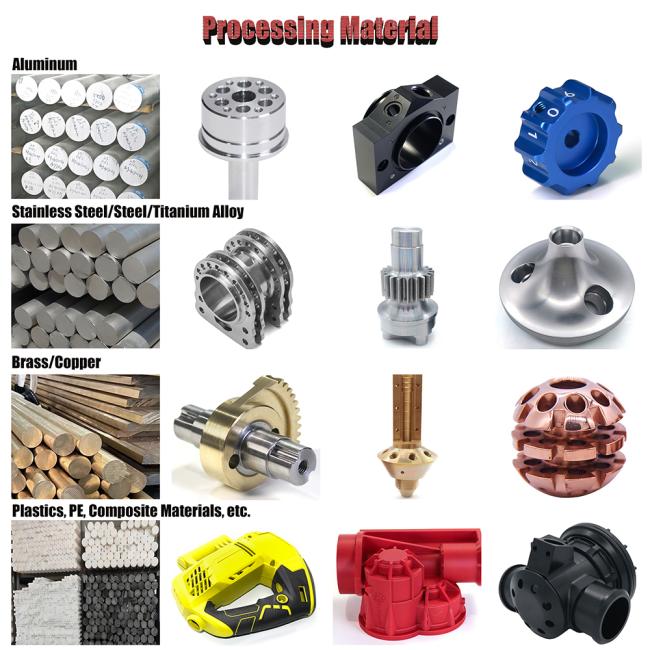
Aluminum:
2000
series,
6000
series,
7075,
5052,
etc.
|
|
Stainlesss
steel:
SUS303,
SUS304,
SS316,
SS316L,
17-4PH,
etc.
|
|
Steel:
1214L/1215/1045/4140/SCM440/40CrMo,
etc.
|
|
Brass:
260,
C360,
H59,
H60,
H62,
H63,
H65,
H68,
H70,
Bronze,
Copper
|
|
Titanium:
Grade
F1-F5
|
|
Plastic:
Acetal/POM/PA/Nylon/PC/PMMA/PVC/PU/Acrylic/ABS/PTFE/PEEK
etc.
|
|
|
Anodized,
Bead
Blasted,
Silk
Screen,
PVD
Plating,
Zinc/Nickl/Chrome/Titanium
Plating,
Brushing,
Painting,
Powder
Coated,
Passivation,
Electrophoresis,
Electro
Polishing,
Knurl,
Laser/Etch/Engrave
etc.
|
|
|
±0.002
~
±0.005mm
|
|
|
Min
Ra
0.1~3.2
|
|
CERTIFICATE
|
ISO9001:2015,AS9100D,ISO13485:2016,ISO45001:2018,IATF16949:2016,ISO14001:2015,ROSH,CE
etc.
|



FAQ
1.
Are
you
a
manufacturer
or
a
trading
company?
We
are
a
factory
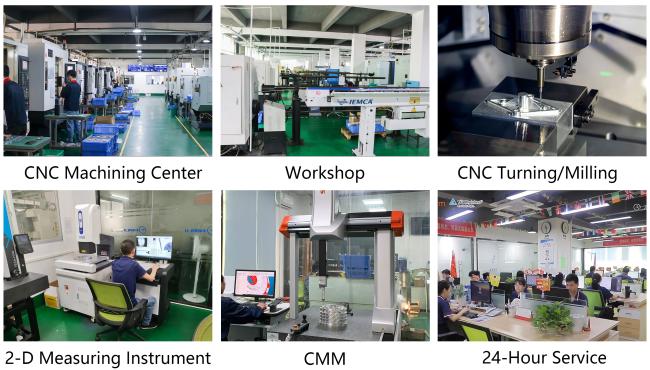
located
in
Shenzhen,
China,
with
20
years
of
rich
experience,
covering
6000
square
meters.
Complete
facilities,
including
3D
quality
inspection
equipment,
ERP
system
and
40
machines.
If
necessary,
we
can
provide
you
with
material
certificates,
sample
quality
inspection
and
other
reports.
2.
How
to
get
a
quote?
Detailed
drawings
(PDF/STEP/IGS/DWG...),
including
quality,
delivery
date,
materials,
quality,
quantity,
surface
treatment
and
other
information.
3.
Can
I
get
a
quotation
without
drawings?
Can
your
engineering
team
draw
for
my
creativity?
Of
course,
we
are
also
glad
to
receive
your
samples,
pictures
or
detailed
size
drafts
for
accurate
quotation.
4.
Can
you
provide
samples
before
mass
production?
Of
course,
the
sample
fee
is
necessary.
If
possible,
it
will
be
returned
during
mass
production.
5.
What
is
the
delivery
date?
Generally,
the
sample
lasts
for
1-2
weeks
and
the
batch
production
lasts
for
3-4
weeks.
6.
How
do
you
control
quality?
(1)
Material
Inspection
-
Check
material
surfaces
and
approximate
dimensions.
(2)
First
inspection
of
production
-
ensure
critical
dimensions
in
mass
production.
(3)
Sampling
inspection
-
check
the
quality
before
delivery
to
the
warehouse.
(4)
Preshipment
inspection
-
100%
inspection
by
QC
assistant
before
shipment.
7.
After
sales
service
team
If
you
have
any
problems
after
receiving
the
product,
you
can
provide
feedback
through
voice
call,
video
conference,
email,
etc.
within
one
month.
Our
team
will
provide
you
with
solutions
within
a
week.