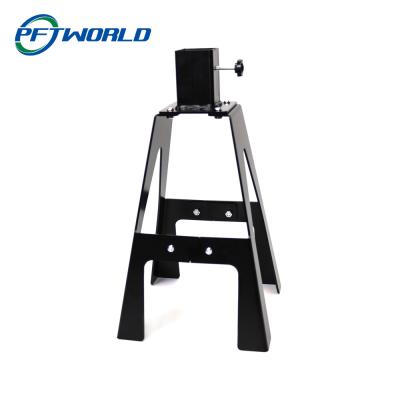
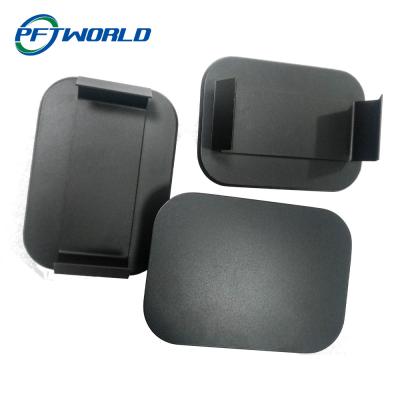
You've
just
received
a
batch
of
freshly
fabricated
sheet
metal
parts.
They
look
good
–
the
dimensions
are
spot
on,
the
bends
are
sharp.
But
when
you
look
closely,
you
see
tiny
burrs,
micro-scratches,
and
a
surface
that's
just…
rough.
For
many
applications,
that's
not
going
to
cut
it.
This
is
where
a
superhero
process
called
electropolishing
comes
in.
It’s
the
magic
touch
that
transforms
a
"good
enough"
part
into
a
"wow,
that's
perfect"
part.
Let's
get
into
what
it
is,
why
it's
so
much
more
than
just
a
pretty
finish,
and
when
you
absolutely
need
it.

So,
What
Exactly
is
Electropolishing?
If
you're
picturing
a
painter
with
a
spray
gun,
think
again.
Electropolishing
is
an
electrochemical
process.
In
simple
terms,
we
use
a
controlled
electrical
current
and
a
special
chemical
bath
to
remove
a
tiny
layer
of
surface
material
from
your
metal
part.
Think
of
it
like
power-washing
a
driveway.
Instead
of
adding
a
layer
of
soap,
the
power
washer
strips
away
the
dirt
and
grime,
revealing
the
clean
surface
underneath.
Electropolishing
does
the
same
thing
at
a
microscopic
level.
It
selectively
removes
the
peaks
and
high
points,
leveling
the
surface
to
a
smooth,
mirror-like
finish.
It’s
the
go-to
finishing
method
for
stainless
steel,
but
it
works
great
on
other
alloys
too.
Beyond
the
Shine:
The
Real
Superpowers
of
Electropolishing
Sure,
the
brilliant,
corrosion-resistant
finish
looks
fantastic
–
and
it
does
wonders
for
products
where
aesthetics
matter.
But
the
true
benefits
are
often
functional:
-
Ultra-Cleanliness
&
Hygiene:
This
is
a
big
one.
By
smoothing
out
the
microscopic
nooks
and
crannies,
we
eliminate
hiding
spots
for
bacteria,
viruses,
and
contaminants.
This
is
non-negotiable
for
medical
devices,
pharmaceutical
equipment,
and
food
&
beverage
processing
machinery.
It
makes
cleaning
and
sterilizing
parts
infinitely
easier.
-
Deburring
on
Autopilot:
Those
tiny,
razor-sharp
burrs
left
over
from
laser
cutting
or
stamping?
Electropolishing
zaps
them
away.
It
reaches
every
nook
and
cranny,
even
internal
surfaces
and
complex
geometries
that
are
impossible
to
reach
by
hand.
The
result
is
a
safer,
smoother
part
that’s
ready
for
assembly.
-
Supercharged
Corrosion
Resistance:
Because
it
removes
the
surface
layer
where
impurities
and
embedded
iron
particles
live,
it
creates
a
uniform,
passive
oxide
layer
on
the
metal.
This
makes
the
part
significantly
more
resistant
to
rust
and
corrosion
than
a
standard
passivation
process
alone.
If
your
part
is
going
to
face
moisture,
chemicals,
or
the
outdoors,
this
is
a
game-changer.
-
Microscopic
Smoothness
for
Better
Performance:
For
parts
that
involve
fluid
flow
(like
in
semiconductors
or
aerospace),
a
smoother
surface
means
less
friction
and
turbulence.
It
can
prevent
adhesion
in
molding
tools
and
reduce
particulate
generation
in
sensitive
environments.
Is
Electropolishing
Right
for
Your
Project?
How
do
you
know
if
you
need
this
premium
finish?
Ask
yourself
these
questions:
-
Is
this
a
medical,
food-grade,
or
semiconductor
part?
If
yes,
electropolishing
is
often
a
requirement.
-
Does
my
part
need
to
withstand
a
harsh
environment?
For
outdoor
or
chemical
exposure,
the
corrosion
resistance
is
worth
it.
-
Are
burrs
and
micro-imperfections
a
deal-breaker
for
my
assembly
or
function?
If
hand-deburring
is
too
costly
or
inconsistent,
electropolishing
is
the
answer.
-
Do
I
need
a
perfectly
clean,
hygienic,
and
easy-to-sterilize
surface?
This
is
the
gold
standard.
The
Bottom
Line
Electropolishing
isn't
just
a
cosmetic
upgrade.
It's
a
critical
performance-enhancing
treatment
that
adds
real
value,
durability,
and
safety
to
your
precision
sheet
metal
parts.
It’s
the
difference
between
a
part
that
works
and
a
part
that
excels.
When
a
standard
powder
coat
or
simple
passivation
isn't
enough,
electropolishing
steps
up
to
deliver
a
flawless
finish
that’s
as
smart
as
it
is
beautiful.
|
|
CNC
Turning,
CNC
Milling,
Laser
Cutting,
Bending,
Spining,
Wire
Cutting,
Stamping,
Electric
Discharge
Machining
(EDM),
Injection
Molding,3D
Printing,Rapid
Prototype,Moulds
etc.
|
|
|
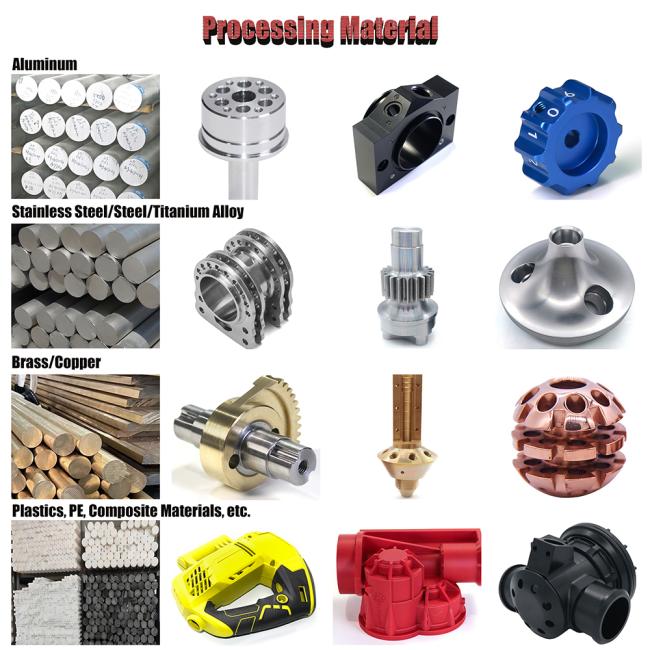
Aluminum:
2000
series,
6000
series,
7075,
5052,
etc.
|
|
Stainlesss
steel:
SUS303,
SUS304,
SS316,
SS316L,
17-4PH,
etc.
|
|
Steel:
1214L/1215/1045/4140/SCM440/40CrMo,
etc.
|
|
Brass:
260,
C360,
H59,
H60,
H62,
H63,
H65,
H68,
H70,
Bronze,
Copper
|
|
Titanium:
Grade
F1-F5
|
|
Plastic:
Acetal/POM/PA/Nylon/PC/PMMA/PVC/PU/Acrylic/ABS/PTFE/PEEK
etc.
|
|
|
Anodized,
Bead
Blasted,
Silk
Screen,
PVD
Plating,
Zinc/Nickl/Chrome/Titanium
Plating,
Brushing,
Painting,
Powder
Coated,
Passivation,
Electrophoresis,
Electro
Polishing,
Knurl,
Laser/Etch/Engrave
etc.
|
|
|
±0.002
~
±0.005mm
|
|
|
Min
Ra
0.1~3.2
|
|
CERTIFICATE
|
ISO9001:2015,AS9100D,ISO13485:2016,ISO45001:2018,IATF16949:2016,ISO14001:2015,ROSH,CE
etc.
|
FAQ
1.
Are
you
a
manufacturer
or
a
trading
company?
We
are
a
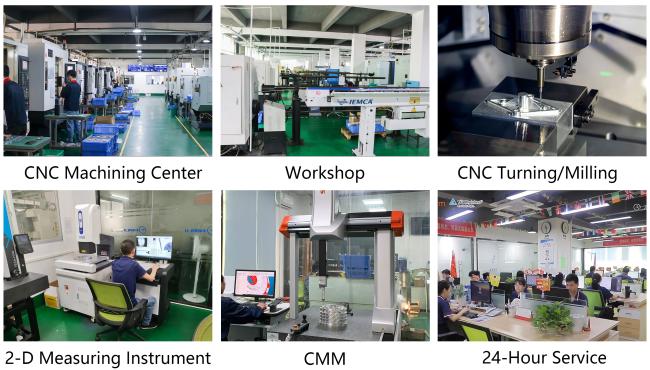
factory
located
in
Shenzhen,
China,
with
20
years
of
rich
experience,
covering
6000
square
meters.
Complete
facilities,
including
3D
quality
inspection
equipment,
ERP
system
and
40
machines.
If
necessary,
we
can
provide
you
with
material
certificates,
sample
quality
inspection
and
other
reports.
2.
How
to
get
a
quote?
Detailed
drawings
(PDF/STEP/IGS/DWG...),
including
quality,
delivery
date,
materials,
quality,
quantity,
surface
treatment
and
other
information.
3.
Can
I
get
a
quotation
without
drawings?
Can
your
engineering
team
draw
for
my
creativity?
Of
course,
we
are
also
glad
to
receive
your
samples,
pictures
or
detailed
size
drafts
for
accurate
quotation.
4.
Can
you
provide
samples
before
mass
production?
Of
course,
the
sample
fee
is
necessary.
If
possible,
it
will
be
returned
during
mass
production.
5.
What
is
the
delivery
date?
Generally,
the
sample
lasts
for
1-2
weeks
and
the
batch
production
lasts
for
3-4
weeks.
6.
How
do
you
control
quality?
(1)
Material
Inspection
-
Check
material
surfaces
and
approximate
dimensions.
(2)
First
inspection
of
production
-
ensure
critical
dimensions
in
mass
production.
(3)
Sampling
inspection
-
check
the
quality
before
delivery
to
the
warehouse.
(4)
Preshipment
inspection
-
100%
inspection
by
QC
assistant
before
shipment.
7.
After
sales
service
team
If
you
have
any
problems
after
receiving
the
product,
you
can
provide
feedback
through
voice
call,
video
conference,
email,
etc.
within
one
month.
Our
team
will
provide
you
with
solutions
within
a
week.