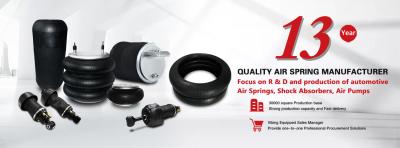
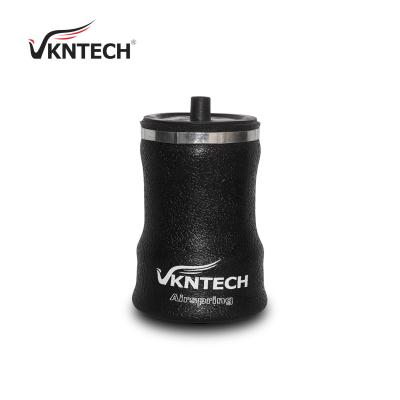
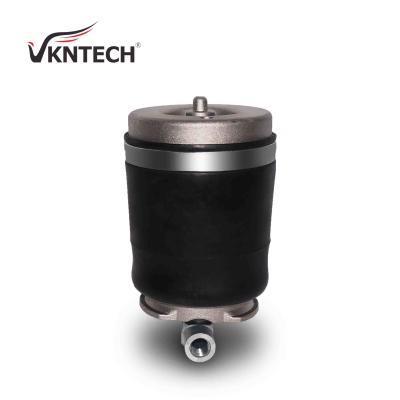
Air
Bellows
The
basic
points
which
must
be
considered
when
selecting
an
air
bellow
as
an
isolator
are:
-
load
or
total
weight
and
number
of
mounting
points
-
recommended
operating
height
-
degree
of
isolation
-
operating
pressure
Load
capability
When
selecting
the
isolator,
there
should
be
sufficient
load-bearing
capability
to
compensate
asymmetric
load
distribution
or
excess
weight.
Air
isolators
have
been
designed
to
absorb
dynamic
increases
in
load
from
operating
vibrations.
Recommended
operating
height
To
ensure
optimum
isolation
and
lateral
stiffness,
isolators
should
be
used
at
the
recommended
operating
height.
Operating
pressure
As
a
rule,
the
size
of
the
air
isolator
is
correct
if
the
operating
pressure
is
between
4
and
6
bar.
Degree
of
isolation
The
degree
of
isolation
is
a
measure
of
the
isolation
of
vibration
excitation.
Vibration
isolation
exists
only
if
the
exciting
frequency
is
at
least
1.4
times
greater
than
the
respective
natural
frequency
Maintenance
of
the
air
springs,
Vehicle
Check-List
-
Check
the
air
lines
and
devices
of
leakage
and
that
they turns
freely.
-
Check
the
bellows
bearing
for
damage,
correct
fastening, deformation,
sharp
edges.
-
Check
the
shock
absorbers
for
operation
and
impermeability as
well
as
tightness
and
bearing.
-
Periodically,
check
nuts
and
bolts
for
proper
torque.
For specific
recommendations
see
manufacturer's
manual.
-
Check
axle
suspension,
trailing
arms
and
rods
for
wear.
-
Check
height
control
valve
to
see
that
it
is
functioning
properly. A
properly
maintained
valve
will
save
unneeded
maintenance expense.
-
Routine
inspection
of
all
of
the
above
according
to
manufacturer's instructions,
will
extend
the
life
of
your
vehicle and
reduce
your
overall
maintenance
expense.
Air
Spring
Installation
-
Before
you
start
installing
air
springs,
make
sure
you
have
all the
necessary
tools
and
equipment
to
perform
the
repair
safely.
-
Familiarize
yourself
with
the
suspension
on
which
you
are
performing the
repair
by
reviewing
the
manufacturers
service guide.
-
If
you
are
in
doubt
about
something,
ask
for
assistance
from
a qualified
suspension
specialist,
the
suspension
manufacturer or
the
air
spring
manufacturer;
This
can
save
you
a
lot
of
time and
aggravation
later
in
the
job.
Important
tips
to
remember
when
installing
a new
unit
-
Check
levelling
valve,
linkage
and
transmission
parts
for wear
and
damage
and
if
necessary
replace
the
damaged parts.
-
Check
that
the
shock
absorber
for
leakages
and
take
a shock
absorber
test.
A
defective
shock
absorber
must
be replaced.
-
Once
the
air
lines
are
disconnected,
check
their
entire length
for
cracks
or
other
damage.
Replace
worn
parts.
-
With
the
air
spring
removed,
other
parts
of
the
air
suspension become
more
accessible.
Check
for
wear
or
damage of
the
frame
hangers,
trailing
arm
bushings,
torque
rods, the
trailing
arms
and
the
air
spring
mounts.
When
it
is
necessary, also
replace
parts.
-
Check
bearing
for
air
spring
bellow
for
external
damage, deformation,
sharp
edges
and
correct
fastening.
-
Before
installing
the
new
unit,
clean
the
air
spring
mounting plates
to
ensure
proper
attachment
to
the
suspension.
-
Always
use
new
attaching
bolts
for
the
installation
and observe
the
tightening
torques.
Never
use
old
bolts, because
these
can
fall
out.
-
Check
the
linkage
of
the
levelling
valve
to
see
that
it
is functioning
properly.
Under
load,
the
linkage
should
move from
the
neutral
position
up
to
the
intake
position.
This
lets air
into
the
springs,
which
brings
the
arm
back
to
the
neutral position.
This
lets
air
into
the
springs,
which
brings
the arm
back
to
the
neutral
position.
That
opens
the
exhaust valve,
allowing
air
to
escape
until
the
arm
returns
to
the neutral
position.
Then
check
the
driving
level.
contact:
Cindy
Huang
wechat:
+8613928831072
whatsapp:
+8613527661764
email:sales@vkairspring.com