English
Sign in

| Price | Negotiable |
| MOQ | 1 Piece |
| Delivery Time | Negotiable |
| Brand | SensorMicro |
| Place of Origin | Wuhan, Hubei Province, China |
| Certification | ISO9001:2015; RoHS; Reach |
| Model Number | N-driver 384 |
| Payment Terms | T/T |
| Brand Name | SensorMicro | Payment Terms | T/T |
| Place of Origin | Wuhan, Hubei Province, China | NETD | <50mK |
| Spectral Range | 8~14μm | Price | Negotiable |
| Minimum Order Quantity | 1 Piece | Model Number | N-driver 384 |
| Field of View | 37°x28° | Certification | ISO9001:2015; RoHS; Reach |
| Resolution | 384x288/17μm |
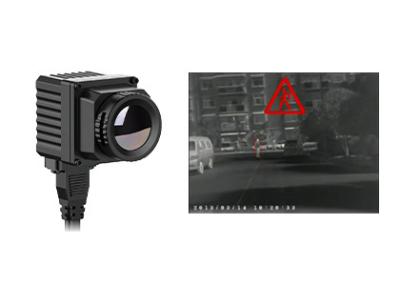
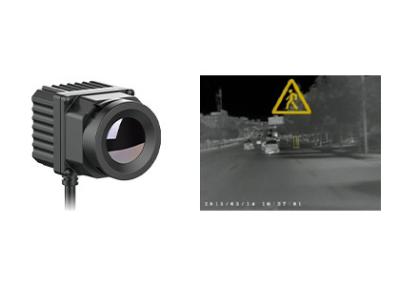
The N-Driver 384 vehicle-mounted infrared module integrates a 384×288/17μm uncooled infrared detector. This automotive night vision thermal camera helps drivers see through total darkness and enhances vision in harsh environments such as heavy rain, snow, thick smoke, and dense fog.
Utilizing thermal imaging technology, the N-Driver 384 automotive infrared camera module reveals unexpected obstacles, highlights sudden events, improves visibility of road signs, navigates unknown roads, and overcomes blindness caused by oncoming headlights. This dramatically reduces driving risks and enhances safety for lives, property, and profiles.
With razor-sharp live imaging, extremely wide viewing range, incredible durability in diverse harsh environments, instant installation on any vehicle, and high affordability for limited budgets, the N-Driver is the perfect choice for driving assistant vision systems.
| Model | N-Driver 384 |
|---|---|
| IR Detector Performance | |
| Resolution | 384×288 |
| Pixel Pitch | 17μm |
| Spectral Range | 8~14μm |
| NETD | <50mk |
| Image Display Performance | |
| Focal Length | 9.7mm |
| Field of View | 37°×28° |
| Video Output Format | CVBS |
| Output Image Frame Rate & Resolution | PAL 768×576@25Hz |
| System Features | |
| Start-up Time | ≤8s (Room Temperature) |
| Heater | When the Window Temperature is Lower than 2°C±2°C, Start Heating by Itself When the Window Temperature is Higher than 7°C±2°C, Turn off the Heating by Itself |
| Compensation Algorithm | Automatic Shutter Compensation |
| Image Algorithm | Automatic Brightness Contrast/Image Enhancement |
| Communication Interface | RS232, Baud Rate: 115200bps/CAN Communication, Speed 500kbps |
| Pedestrian/Vehicle Detection | / |
| Electrical Features | |
| Supply Voltage | DC9V~32V |
| Overall Power Consumption | ≤3.5W@24V Power Supply, Window Heating is off ≤9W@24V Power Supply, Window Heating is on |
| Operating Range | |
| Observe Range | Person: 1.8m×0.5m ≥150m Car: 2.3m×2.3m ≥300m |
| Detect Range | / |
| External Cable Connection | |
| Cable Length | 4m |
| Standard External Interface | Power Supply: DC5.5*2.1 Female Connector Video: RCA Lotus Male Connector Serial Port: SM 2.54-3P Male Connector (Pin) |
| Physical Characteristics | |
| Dimension (mm) | 40.0×36.0×58.0 (Without Cable) |
| Weight | 150g±3g (Without Cable) |
| Environmental Adaptation | |
| Operation Temperature | -40°C ~ +85°C |
| Storage Temperature | -45°C ~ +90°C |
| Environmental Test | Salt Spray: ISO16750-4; Harsh Level IV Industrial Solvent: GB/T28046.5-2013 |
| Reliability Test | Vibration: ISO16750-3, Grade A Flame Retardant: GB8410, Grade B Stone Impact: ISO16750-3, Grade A ESD: Contact Discharge ±8KV, Air Discharge ±15KV |
| Package | Sealed Case IP67 |
| Certification | |
| EMC | EMC Test Certification (ISO10605, ISO11452-4, ISO11452-2, ISO7637-2) |
The N-Driver 384 automotive thermal imaging camera is widely used in Advanced Driver Assistance Systems.

Low light needs natural light and transforms weak natural light image into enhanced electronic image through image intensifier.
Active IR actively emits infrared light and uses infrared beam reflected by the target. It has very poor concealment.
Thermal imaging doesn't need any light and is a passive infrared night vision that detects infrared radiation difference between targets and scene or different parts of an object. It is not affected by changes in surrounding lighting conditions, during night or even in fog, rain and other harsh environments.
In most cases, you cannot. But infrared rays can't penetrate walls, and glass can block IR. So, if you don't want to be detected, you can conceal behind glass or walls to block the thermal imaging.