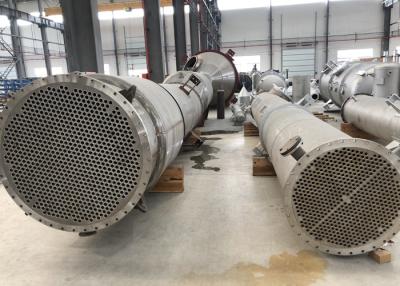
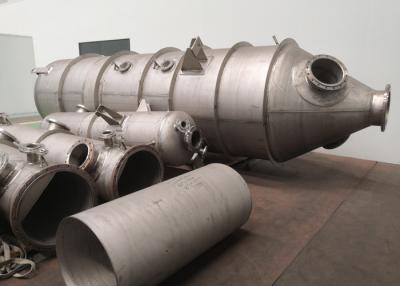
Falling
Film
Wastewater
MVR
Evaporator
System
For
Crystallization
&
Chemical
Desalination

Engineer-to-order
falling
film
MVR
(Mechanical
Vapor
Recompression)
evaporator
for
wastewater
concentration,
chemical
desalination,
and
salt
crystallization.
Thin-film
vacuum
boiling
protects
heat-sensitive
streams
while
MVR
recycles
latent
heat,
delivering
low
OPEX,
deep
TDS
reduction,
and
continuous,
stable
operation
for
ZLD
schemes.
Key
Benefits
-
High
energy
efficiency:
Electric-driven
vapor
recompression
minimizes
fresh
steam
after
start-up.
-
Desalination
&
crystallization:
Drives
brine
to
supersaturation
for
salt
recovery
and
reduced
discharge.
-
Low
ΔT,
high
quality:
Falling-film
duty
preserves
organics
and
limits
thermal
degradation/foaming.
-
Scaling
mitigation:
Optimized
ΔT/LMTD
and
film
distributors,
antiscalant
dosing,
CIP-ready
design.
-
Automated
uptime:
PLC/HMI
recipes,
alarms,
historian,
and
remote
diagnostics
for
24/7
operation.
Process
&
Thermal
Economy
Secondary
vapor
is
mechanically
compressed
to
elevate
saturation
temperature
and
reused
as
the
heating
medium.
Even
film
distribution
over
vertical
exchangers
maintains
high
heat-transfer
coefficients;
controlled
residence
time
and
pressure/ΔT
setpoints
enable
predictable
desalination
and
crystallization
with
low
specific
energy.
Materials
&
Cleanability
Wetted
parts
in
SS316L/duplex
(Ti/Hastelloy
optional).
Drainable
layouts,
large
access
for
inspection,
validated
CIP,
and
elastomer/material
selections
per
chemistry
(chlorides,
solvents,
acids/alkalis).
Process
Overview
--
Wastewater
Desalination
to
Crystals
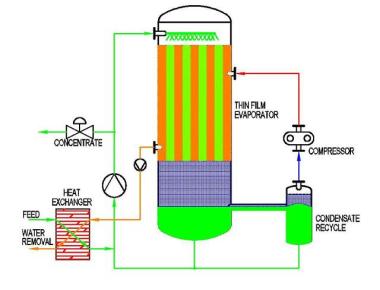
-
Feed
conditioning:
screening/filtration,
softening
or
pH
trim,
antiscalant
to
control
Ca/Mg/Si
scaling.
-
MVR
falling
film
(vacuum):
VFD
compressor
controls
ΔT;
shell
vacuum
defines
boiling
point.
-
Crystallization:
seeded
growth
(DTB/OSLO/FC)
for
targeted
PSD
and
purity;
mother
liquor
recycle.
-
Condensate
polishing:
filters/RO/AC
to
meet
reuse
or
discharge
limits
(conductivity/TOC
guard).
-
Solids
handling/ZLD:
centrifuge
->
dryer
->
regulated
disposal
or
resource
recovery.
Key
Components
-
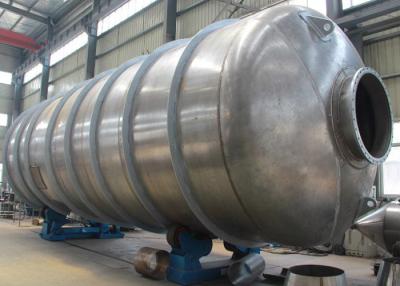
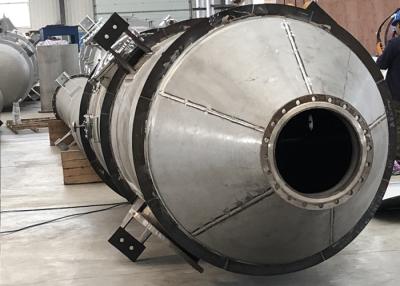
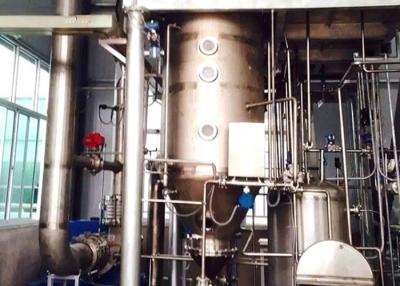
Falling-film
evaporator
body
with
film
distributors
and
vapor-liquid
separator
-
MVR
mechanical
vapor
compressor
(turbo/Roots)
with
VFD
for
ΔT/capacity
control
-
Surface
condenser,
vacuum/NCG
handling,
preheaters/heat
recovery
HX
-
Crystallizer,
centrifuge,
dryer;
condensate
polishing
skid
-
PLC/HMI/SCADA;
instruments
(T/P/flow/cond/level);
CIP
and
antiscalant
dosing
Performance
&
Sizing
|
Parameter
|
Typical
Range*
|
|
Operation
|
Continuous,
vacuum
|
|
Electric
use
(MVR)
|
~15-40
kWh
per
ton
of
water
evaporated
|
|
Shell
pressure
|
~6-25
kPa(abs),
duty-dependent
|
|
Desalination
depth
|
Up
to
crystallization/solid
discharge
(feed-dependent)
|
|
Materials
|
SS316L
/
duplex;
Ti/Hastelloy
on
request
|
*Actual
performance
depends
on
feed
salinity/COD,
fouling
tendency,
compression
ratio,
and
crystallizer
design.
FAQ
Can
it
follow
membranes
to
reach
ZLD?
Yes--common
flowsheets
pair
RO/NF
pre-concentration
with
falling-film
MVR
and
a
crystallizer
for
final
solids
discharge.
How
do
you
control
scaling
on
high-TDS
streams?
Through
pretreatment,
optimized
film
ΔT/velocity,
antiscalant
dosing,
and
scheduled
CIP
with
online
fouling
indicators.
What
condensate
quality
is
achievable?
Low
conductivity/TOC
suitable
for
reuse
after
polishing;
quality
guards
ensure
compliance
with
site
limits.
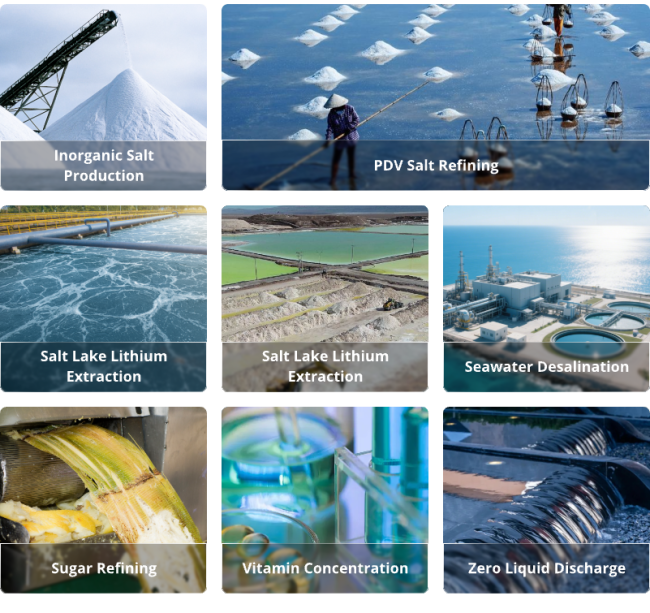
Application