English
Sign in
| Price | Negotiate |
| MOQ | Negotiate |
| Delivery Time | 1-7 Working Days Depends On Quantity |
| Brand | YUDA CRYSTAL |
| Place of Origin | Zhengzhou, China |
| Certification | None |
| Model Number | YD-A+ |
| Packaging Details | Carton box |
| Payment Terms | 100% Payment In Advance |
| Supply Ability | 50000carats per month |
| Shape | Round, Fancy | Customization | Welcome |
| Packaging Details | Carton box | Supply Ability | 50000carats per month |
| Place Of Origin | Zhengzhou, China | Technology | HPHT |
| Minimum Order Quantity | Negotiate | Component | Carbon |
| Courier | DHL, FedEx, UPS, TNT, EMS etc | Enhancement | None |
| Payment Mode | T/T, Bank Transfer, PayPal, Western Union | Symmetry | None |
| Usage | For Cutting HPHT Diamonds | Place of Origin | Zhengzhou, China |
| Cut | Round, Fancy | Polish | None |
| Available Type | HPHT | Product Name | HPHT Lab Grown Diamonds |
| Color | DEF | Grade | High |
| Treatments Applied | None | Model Number | YD-A+ |
| Hardness | Moh's 10 Scale | Sample Order | Welcome |
| Clarity | VVS VS | Certification | None |
| Brand Name | YUDA CRYSTAL | Payment Terms | 100% Payment In Advance |
| Brand | Yuda Crystal | Assortment | Good |
| Price | Negotiate | Delivery Time | 1-7 Working Days Depends On Quantity |
| Packaging | As Export Standard | Carat Weight | 3-15ct |
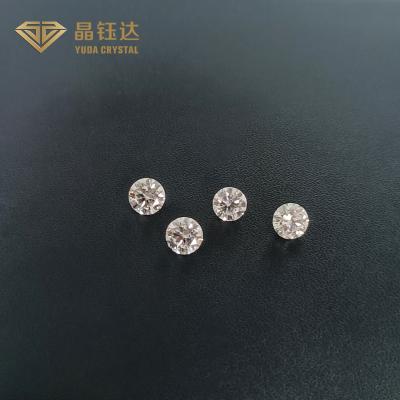
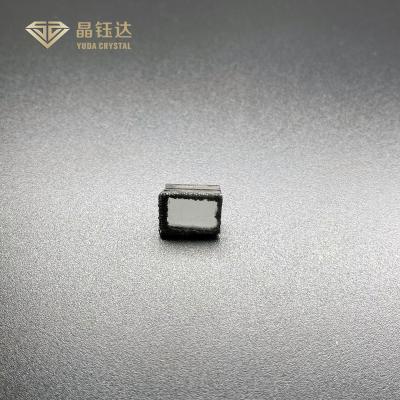
100% Clean And Pure HPHT Man Made Lab Created Diamonds For Making HPHT Diamond Jewelry
HPHT Lab Grown Diamonds Description
Lab-grown
diamonds
are
real
diamonds.
There
are
two
ways
to
create
rough
lab-grown
diamonds.
They
are
HPHT
and
CVD
methods.
The
HPHT
diamond
cultivation
process
takes
place
in
a
small
capsule
in
a
device
with
ultra-high
pressure.
In
this
capsule,
the
diamond
powder
is
dissolved
in
the
molten
metal
solvent,
and
then
begins
to
crystallize
to
form
diamond
crystals.
The
entire
crystallization
process
will
take
weeks
or
even
months.
At
a
time,
one
or
more
crystals
are
produced.
In
order
to
cultivate
colorless
HPHT
diamonds,
apart
from
the
need
to
isolate
nitrogen
during
the
cultivation
process,
the
cultivation
of
high-purity
colorless
diamonds
(type
IIa
or
weak
type
IIb)
often
requires
a
longer
cultivation
period
and
stricter
temperature
and
pressure
conditions.
As
a
result,
the
cultivation
cycle
is
longer
than
that
of
type
Ib
synthetic
diamonds,
so
how
to
use
HPHT
synthesis
to
grow
large-grain
crystals
has
always
been
a
problem.
However,
with
the
development
of
technology,
it
is
now
possible
to
use
HPHT
synthesis
to
grow
more
than
10
carats
Diamond
crystals
too.
Chemical
Vapor
Deposition
(CVD)
is
a
method
of
decomposing
raw
materials
at
high
temperatures
to
produce
active
particles
such
as
carbon
atoms
or
methyl
groups,
and
depositing
and
growing
a
diamond
film
on
the
substrate
(substrate)
under
certain
process
conditions
Methods.
CVD-grown
synthetic
diamonds
do
not
contain
metal
inclusions.
But
they
usually
contain
dark
graphite
inclusions
or
other
mineral
inclusions,
which
are
formed
during
their
unique
growth
process.
Graphite
inclusions
are
different
from
metal
inclusions
in
that
they
have
no
metallic
luster.
Whether
laboratory-grown
diamonds
or
natural
diamonds,
loose
diamonds
after
cutting
and
polishing
can
not
be
distinguished
by
the
naked
eye.
It
can
be
detected
only
with
the
help
of
professional
equipment.
With
professional
equipment,
the
comparison
of
the
color,
crystal
shape
and
crystal
surface
characteristics,
internal
inclusion
characteristics,
absorption
spectrum
and
ultraviolet
fluorescence
characteristics
of
the
tested
diamonds
can
completely
distinguish
the
artificially
cultivated
diamonds
from
the
natural
diamonds
Parameters of HPHT Lab Grown Diamonds
| HPHT Lab Grown Diamonds Details | |
| Brand Name | Yuda Crystal |
| Name | HPHT Lab Grown Diamonds |
| Diamond Color | D-F |
| Diamond Clarity | VVS-VS |
| Diamond Carat Weight | 3.0-15.0carat |
| Diamond Cut | Round, Fancy |
| Technology | HPHT |
| Size | Customization |
| Shape | Round, Fancy |
| Application | For Cutting Lab Grown Loose Diamonds |
| Place Of Origin | Zhengzhou, China |
| Delivery Time | 1 - 7 Working Days Base on Order Quantity |
| Payment Terms | 100% Payment In Advance |
| Payment Methods | T/T, PayPal, Western Union, Bank Transfer |
| Shipping way | DHL, FedEx, SF Express, UPS, EMS, TNT etc |
| M.O.Q | Negotiable |
| Diamond Type | Synthetic(lab created) |
| Location | Zhengzhou, China |
| Treatments Applied | None |
| Fire Dispersion | 0.044(Same as Natural Diamond) |
| Brilliance Refraction Index | 2.42(Same as Natural Diamond) |
| Relative Density | 3.52(Same as Natural Diamond) |
| Chemical Composition | Carbon(Same as Natural Diamond) |
| Moh's Hardness | 10(Same as Natural Diamond) |
HPHT Lab Grown Diamonds Introduction
Natural diamonds are created by nature and are the result of high temperature and pressure formed over billions of years. The Rough Lab Grown Diamonds are produced in the laboratory, usually in a few weeks. The chemical difference between the two is same.
So how do you distinguish between Rough Lab Grown Diamonds and natural diamonds?
There is no obvious difference between the Rough Lab Grown Diamonds and natural diamonds. Even professional gemologists need special equipment to identify them. By zooming in, professionals will be able to discern subtle contrasts in diamond inclusions grown and mined in the laboratory.
| The Difference Between Lab Diamond And Natural Diamond | ||
| Properties | Earth Mined | Lab Created |
| Guaranteed Conflict-Free | No | Yes |
| Hardness (MOHS) | 10 | 10 |
| SP3 Carbon Diamond Bonds (%) | 100% | 100% |
| Internal Crystal Structure | Face-Centered Cubic | Face-Centered Cubic |
| Hardness Comparable | 2.42 | 2.42 |
| Relative Diversity | 3.52 | 3.52 |
| Color Diffusion | 0.044 | 0.044 |
| Color | Various Grades | K to D grades |
| Price | $$$$$ | $$$ |
HPHT Lab Grown Diamonds Details